
Modern home audio is often a connected system shared across rooms, routines, and users. Yet its physical controls remain designed for individual speakers, pushing most system-wide interactions onto a personal phone.

This concept explores how interchangeable modules could give each speaker a more purposeful role within the larger system.
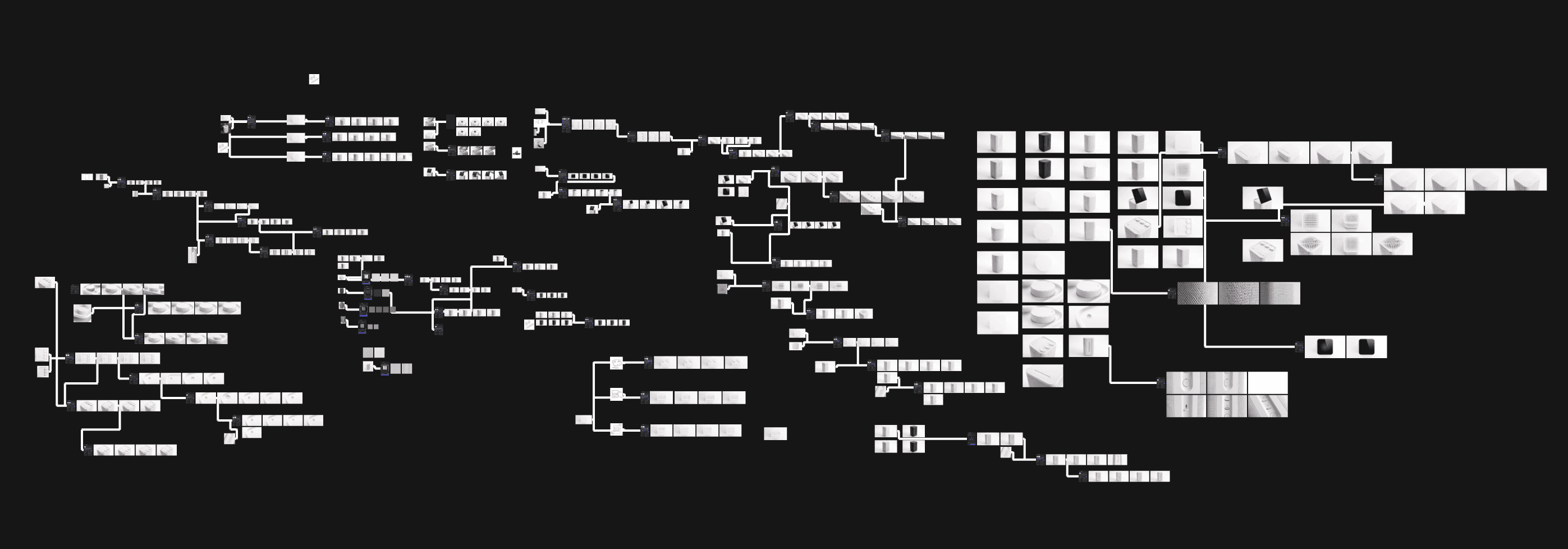
This project investigated how AI could strengthen a traditional industrial design process without replacing designer judgment. I experimented with AI-assisted research workflows and Vizcom ideation before using Rhino and Grasshopper to refine the concept into a believable concept.
Research Discovery
Research Synthesis
Opportunity Identification
Early Ideation
Discovery Research


This phase built a broad understanding of the home-audio market, user behaviors, and existing technology. Connecting these findings revealed recurring frustrations and unmet needs, helping ground the modular system in meaningful opportunities rather than assumptions.
Research combined official product information, professional testing, owner feedback, technical documentation, and academic and industry sources.
ChatGPT
Framed the research phases and wrote the guiding questions
Claude
Compared reports across phases, flagged contradictions and weak claims
NotebookLM
Grounded every insight in one source-linked research library

Apple HomePod 2
Strength: Automatic room sensing and Apple integration make setup and everyday playback feel effortless.
Weakness: Setup requires an iPhone or iPad, creating friction for guests and mixed-platform households.

Amazon Echo Studio 2025
Strength: Alexa+, room correction, and accessible controls create a capable voice-led smart-home experience.
Weakness: Mono playback, limited loudness, and restrained bass prevent the listening experience from feeling truly premium.

Bang & Olufsen Beosound A5
Strength: Portable construction, premium materials, Bluetooth fallback, and an upgradeable platform support flexible, long-term ownership.
Weakness: Moving the speaker can reduce sound quality until room compensation is manually repeated through the app.

Bluesound Pulse M
Strength: High-resolution multiroom playback and a wide soundstage appeal to users who prioritize flexible, detailed home audio.
Weakness: Its app-centered experience and inconsistent bass balance add complexity without fully justifying the premium price.
Current Task Flow and Friction Points in the Sonos Speaker Usage
Decide to listen
Find phone
Open Sonos app
Friction Point
Connect to speaker/system
Setup ties control to one phone for easy use
Select speaker/room
Find content
Connect
Control
Select content
Friction Point
Start playback
Physical controls scored highest for phone independence
Adjust volume
Friction Point
Skip/pause/change music
App-only control added complexity in every review
Put phone away
Re-engage when another adjustment is needed
Control
Re-engage
Key Findings
Premium Value Goes Beyond Sound
Strong acoustic performance loses value when setup, connectivity, or daily operation becomes unreliable.
Premium Products Should Adapt to Different Situations
Users may want the same speaker to work for personal listening, entertaining guests, multiroom audio, or home-theater expansion.
Physical Controls Remain Valuable
Products with clear knobs, buttons, presets, and status indicators make routine actions easier and reduce reliance on a phone.
Shared Households Need Simpler Access
Connected speakers often assume that one account, phone, or ecosystem controls the experience, creating friction for guests and household members.
Focused Research
Using gaps identified in the initial research, I directed AI to investigate and deepen its research the parts of home-speaker ownership that created the most friction. I visualized these findings through a Pugh matrix and benchmarking, then used the key findings to guide my final design directions.
BENCHMARK 01 · COMPETITIVE · 12 SPEAKERS, 8 BRANDS
Speaker benchmarking
Each speaker earns 1 point for each of eight ways it helps a system grow or last. I directed AI to build the criteria from buyer guides, repair research and owner complaints, then score every speaker against published specs and US list prices.
$100
$150
$200
$300
$500
$1,000
$2,000
B&O Beosound A5
~$1,500 · 4/8
Sonos Move 2
$499 · 7/8
Sonos Era 300
$479 · 7/8
Bose SoundLink Max
$399 · 3/8
Bose Lifestyle Ultra
$299 · 5/8
Apple HomePod
$299 · 4/8
Sonos Era 100
$219 · 7/8
Amazon Echo Studio
$220 · 7/8
JBL Charge 6
$199 · 4/8
Sonos Roam 2
$179 · 4/8
JBL Flip 7
$149 · 4/8
UE Boom 4
$110 · 3/8
Modular System
0
1
2
3
4
5
6
7
8
Growth score (0–8) →
Product Category (Color)
Portable
Home / smart
Sonos
Modular System
Growth score · 1 pt each
01
Add more — pair or group more units
02
Add different — sub, surrounds or soundbar
03
Music & TV — one unit does both
04
Open — groups with other brands
05
Built to last — replaceable parts
06
Works without the app
07
Rearrange, don’t rebuy
08
Affordable next step — add-on under $200
Scored from published specs, Sept 2026; US list prices. Sonos Move 2 counts home-theater use via Portable Surrounds (Sonos 27). Criteria drawn from buyer guidance by Best Buy, Crutchfield and Consumer Reports, repair research by Deloitte, and Sonos owner complaints.
To compare popular speakers, I researched what buyers look for when choosing a home speaker or adding to an existing system. I then used AI to turn those factors into eight criteria and score each speaker: 1 point for every way it helps a system grow or last.
BENCHMARK 02 · INTERNAL · SONOS LINEUP
Sonos Breadth benchmarking
Each Sonos speaker earns 1 point for each of eight fixes to the system’s most common complaints. I wrote the criteria from owner and press complaints, then directed AI to score every speaker against Sonos’s published specs, support docs and list prices.
$0
$200
$400
$600
$800
$1,000
$1,200
Nothing in Sonos scores 7+
Arc Ultra
$1,099 · 5/8
Sub 4
$899 · 1/8
Beam Ultra
$699 · 3/8
Five
$599 · 5/8
Sub Mini
$499 · 0/8
Beam (Gen 2)
$499 · 3/8
Era 300
$479 · 5/8
Move 2
$499 · 6/8
Ray
$229 · 3/8
Era 100 / 100 SL
$189–219 · 5/8
Roam 2
$179 · 5/8
Modular System
0
1
2
3
4
5
6
7
8
Upgrade-friendly score (0–8) →
Primary Role
Portable
Music room
Home theater
Bass
Modular System
Upgrade-friendly score · 1 pt each
01
Useful on its own
02
Bass included — no sub needed
03
More than one job
04
Pairs across models
05
Works when Wi-Fi or the app fails
06
Repairable parts
07
Affordable step up — under $250
08
Adds, doesn’t replace
Scored from Sonos published specs and support docs, Sept 2026; sonos.com US list prices, ladder at single-item list prices. No Sonos speaker stereo-pairs with a different model (SL variants excepted). Complaint themes from Sonos Community, ConsumerAffairs and TechRadar.
I also compared speakers within Sonos's own lineup. From research into the system's most common complaints (costly add-ons, strict pairing rules, dropouts, and short lifespans), I created eight criteria, each one a fix for a complaint. I then used AI to score every Sonos speaker against them.
Pugh Matrix
Criteria
Tactile Control
Screen
Acoustic Extension
Normal Control
Voice
Smart Audio
Connectivity
Power / Portable
Shared accessibility
+1
+1
0
+1
0
0
-1
0
Reduces phone dependency
+1
+1
0
+1
+1
0
-1
0
Physical interaction
+1
+1
0
+1
-1
-1
-1
0
Supports modularity
+1
+1
+1
+1
+1
+1
+1
+1
Adds meaningful functionality
+1
+1
+1
0
+1
+1
0
+1
Fits Sonos ecosystem
+1
+1
+1
+1
+1
+1
+1
0
Ease of integration
+1
0
0
+1
0
-1
0
-1
Total
7
6
3
5
2
1
0
1
I designed eight module concepts based on premium speaker features, then created a Pugh Matrix to evaluate each one. The criteria combined key customer priorities with specific opportunities to enhance the Sonos system. Using this framework, I utilized AI to score each concept against established professional testing and owner feedback.
Key Findings

Shared Products Need Shared Interfaces
Speakers live in shared spaces, but deeper functions are often tied to one phone — a visible interface makes access easier for everyone nearby.

More Control, Less Phone
A richer tactile interface brings everyday controls onto the product itself, so people aren’t constantly reaching for an app.

One Speaker, Different Listening Needs
An acoustically expandable system lets one core product adapt to more situations, growing with the user instead of being replaced.

Personas

Core User
Daniel Brooks
Daniel and his family love to host people and throw parties at home. He loves his home speaker system, but with large groups over, changing the volume or song becomes inconvenient and overly complicated.
Goals
Host parties where the music just works.
Frustrations
Volume and song changes are too complicated.
Needs
Simple controls anyone at the party can use.

Primary User
Maya Ortiz
Maya loves her home speaker system, but has a couple of speakers she never touches. She wants even better sound from them, but still loves the simple minimalism of the normal speakers.
Goals
Better sound from the speakers she already owns.
Frustrations
A couple of speakers never get touched.
Needs
Better sound without losing the minimal look or buying more expensive speakers
BUying Strategy
I studied eight products in six markets that all sell a core plus add-on modules, and recorded how each one packages, prices and markets them.
01 · QUESTION
How should a modular speaker be sold?
One box with every module felt wrong.
02 · SCAN
8 products, 6 markets
Audio, lighting, computing, gaming, appliances, mobile gear.
03 · RECORD
Price and marketing
The core, how modules are sold, the price signal, the message.
04 · MAP
Plot the patterns
Who builds the system, and when the modules are bought.
05 · DECIDE
3 concepts, 1 plan
Core, Sets and Build your own, combined into one store.
Eight products, plotted by how their modules are bought
All at once
When is it bought?
Over time
B · SETS
C · BUILD YOUR OWN
UNUSED
Brand-chosen modules sent over time, like a subscription. None of the eight did this.
A · START WITH THE CORE
Sonos Sets
Audio · save £20–£170
Dyson V15
Appliances · tiers by tools
Philips Hue
Lighting · starter kit
Nanoleaf Shapes
Lighting · kit + expansions
Framework Laptop
Computing · cards $9–$149
Peak Design Mobile
Mobile · $32 entry, $332 all
KitchenAid
Appliances · attachments
Nintendo Joy-Con
Gaming · $50 one, $80 pair
Brand bundles it
Who builds it?
Customer picks pieces
WHAT THE MAP SHOWED
Core first, modules later
KitchenAid, Peak Design and Nintendo sell a complete core, then every add-on on its own. The add-ons carry the margin.
Named sets up front
Sonos and Dyson sell a lifestyle, not a parts list, and show the saving against buying each piece.
Configure at checkout
Framework starts from a $549 base and lets you choose each module before you pay.
The key finding
Philips Hue and Nanoleaf sit on the line between sets and single modules: a starter kit first, add-ons forever. That became the plan: sets, single modules and a builder in one store.
Sources: Sonos UK store; Liliputing and Ars Technica (Framework); Kickstarter coverage (Peak Design); Engadget (Nintendo); Dyson Community and TechRadar (Dyson, Philips Hue); MobileSyrup (Nanoleaf); KitchenAid retailers. Prices as published at the time of each source. Positions on the map are qualitative.
Three patterns I found became three ways to buy
Each way of selling modules I found in the research became one door into the store. All three share one price list, so no one ever has to buy the whole system at once.
WHAT I FOUND
HOW YOU BUY IT
ONE STORE
Core first, modules later
KitchenAid · Peak Design · Joy-Con
A complete core wins the first sale. Single add-ons keep selling for years and carry the margin.
DOOR A · ONE NEW PIECE
Add a piece
Core $249 · modules $49–$149
Full single price, any time.
Named sets up front
Sonos · Dyson · Philips Hue · Nanoleaf
Buyers pick a lifestyle, not a parts list, and see what they save against single pieces.
DOOR B · A WHOLE NEW SYSTEM
Get a set
Essential $279 · Home $399 · Everywhere $479
Save up to 17% against single pieces.
Configure at checkout
Framework
Buyers choose every module before they pay, so a big build feels personal.
DOOR C · A BIG UPGRADE
Build or upgrade
10% off 2 modules · 15% off 3+
Modules you already own count.
ONE PRICE LIST
One store, three doors
01
A set always beats building the same pieces.
02
Discounts never stack. The cart picks the best price.
03
Modules you own count toward upgrade savings.
04
Single prices never change, so every saving is honest.
You never buy the whole system at once. It grows with you.
Prices are illustrative placeholders for the concept. Precedents are from the market research on the previous board.
Brand analysis and mood board


Black or white, matte finishes, and a fabric or perforated face — every Sonos product stays inside the same restrained material language, even as the shape shifts from a slim soundbar to a squat cylinder.
Final Design modules


Sound Extension
Adds audio hardware to expand the speaker’s sound capabilities. This lets the system adapt to different listening needs.

Tactile Control
Physical buttons provide quick, tactile control without a phone. This makes the speaker easier for everyone to use.

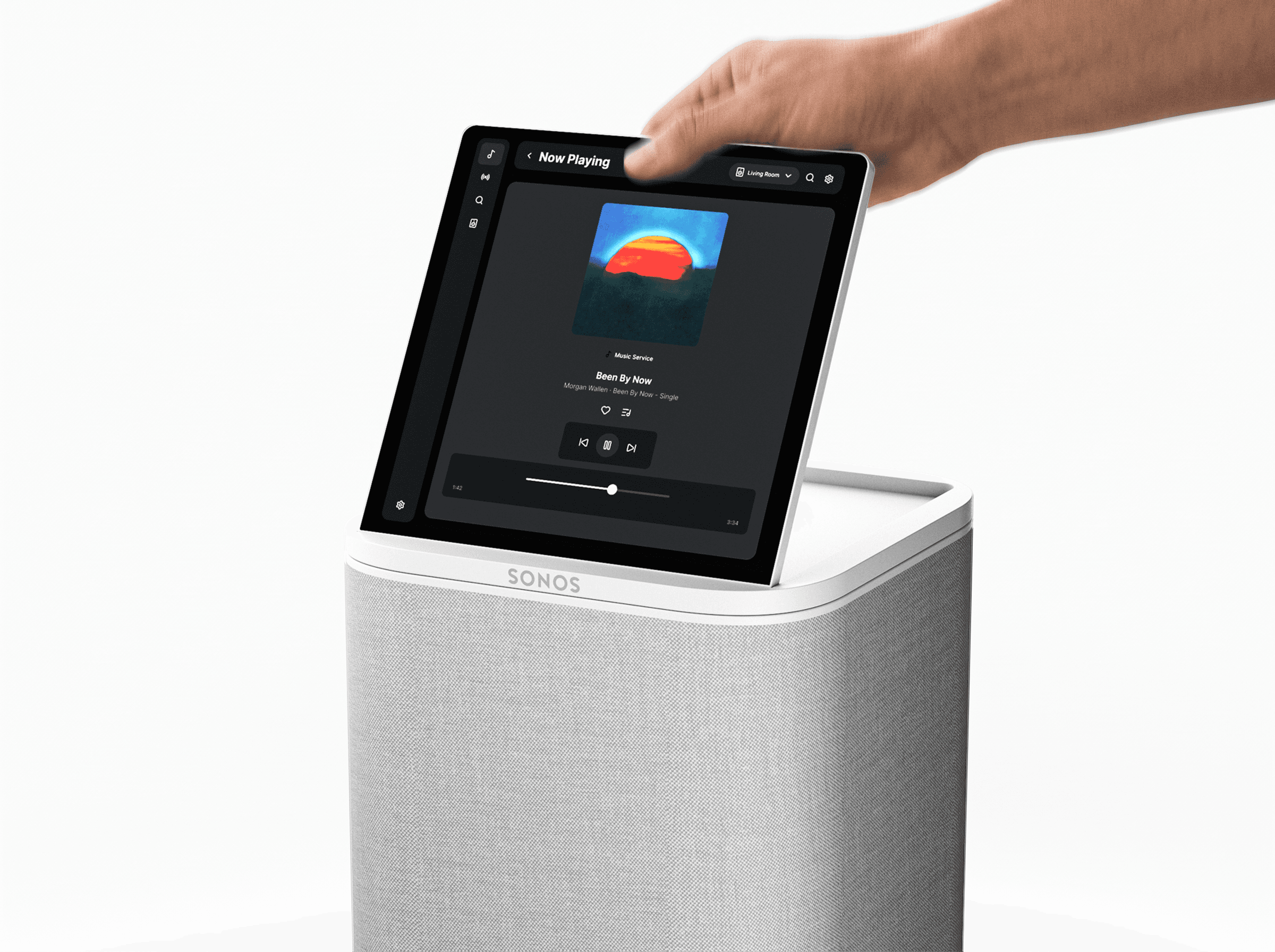
Screen Control
A built-in screen provides direct visual control of the speaker. This makes controls accessible to everyone nearby.

Standard Control
Provides familiar controls found on existing Sonos speakers. It offers simple physical control for everyday actions.


Modify
Render this sketch as a premium home speaker, with soft white plastic and a fabric material around the main body.


Modify
Create a top view of this speaker. Vary the top profile shape.


Modify
Create a front 3/4 view for each of these.


Modify
Map out the touch-point divot on the top, based on the sketch.

Modify
Add a screen to the top of the speaker. Make it take up most of the top surface.

Modify
Add a perforation pattern to the top surface of the speaker. Have the perforations get smaller as they get closer to the edge.

Modify
Map out the button placement from the sketch onto the top of the speaker.

Button Mapping
Shape Exploration
Small Details Exploration
Modify
Focus in on the dials. Make small changes to each to give each a different design.


Modify
Focus in on the buttons. Make small changes to each to give each a different design.


Modify
Render a back view of this speaker and add buttons for power, microphone, and Bluetooth.


Modify
Give the perforation pattern a more circular design


Figma components and screens design
Figma components and screen creation
Sonos App
Existing icons, type, spacing, and layout patterns used as the source material
AI Draft
Recreated key assets and blocked out a rough screen structure
Figma Refinement
Hand-refined the hierarchy, usability, and overall experience

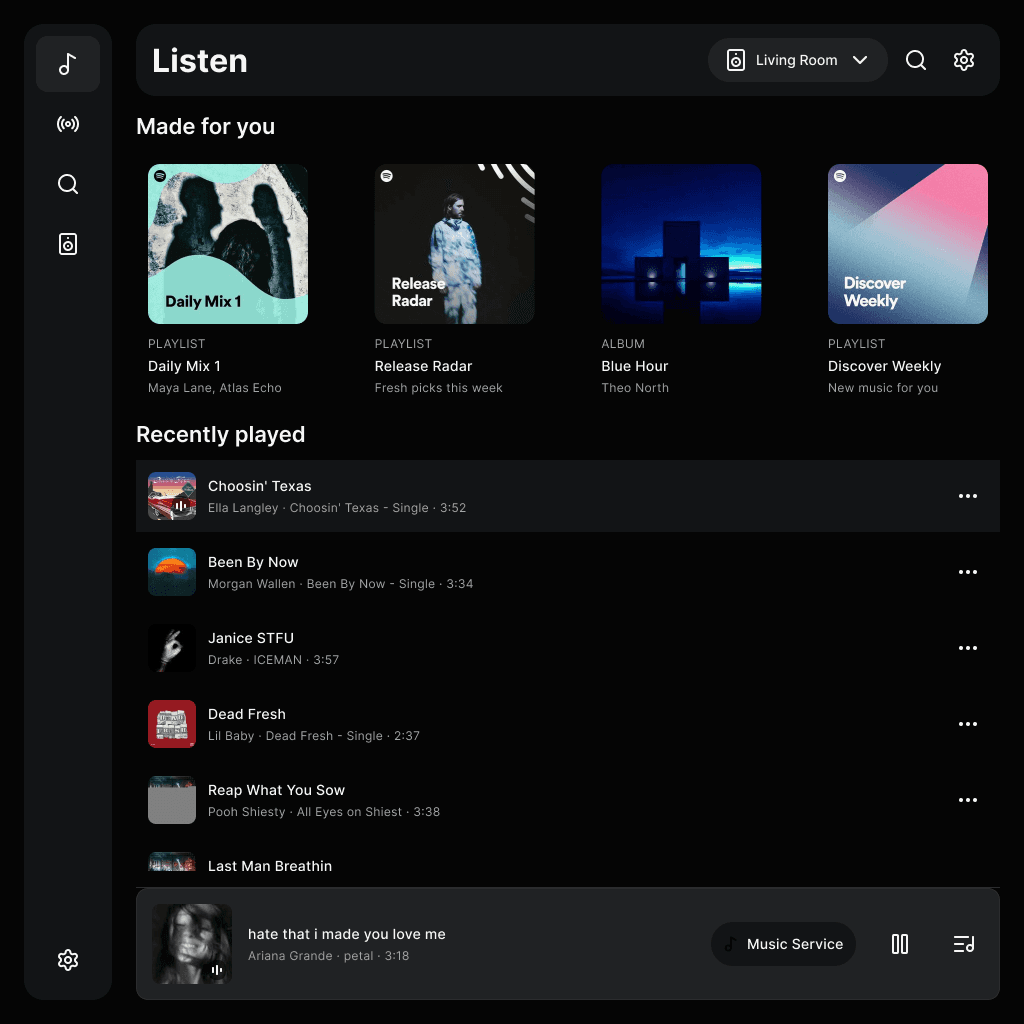

Home Screen
Browse Screen
Final Design
FINAL RENDERS WERE MODELED IN RHINO, RENDERED IN KEYSHOT, AND POST-PROCESSED IN PHOTOSHOP AND LIGHTROOM.
In context renders used a combination of KeyShot, Photoshop, Lightroom, and Vizcom.

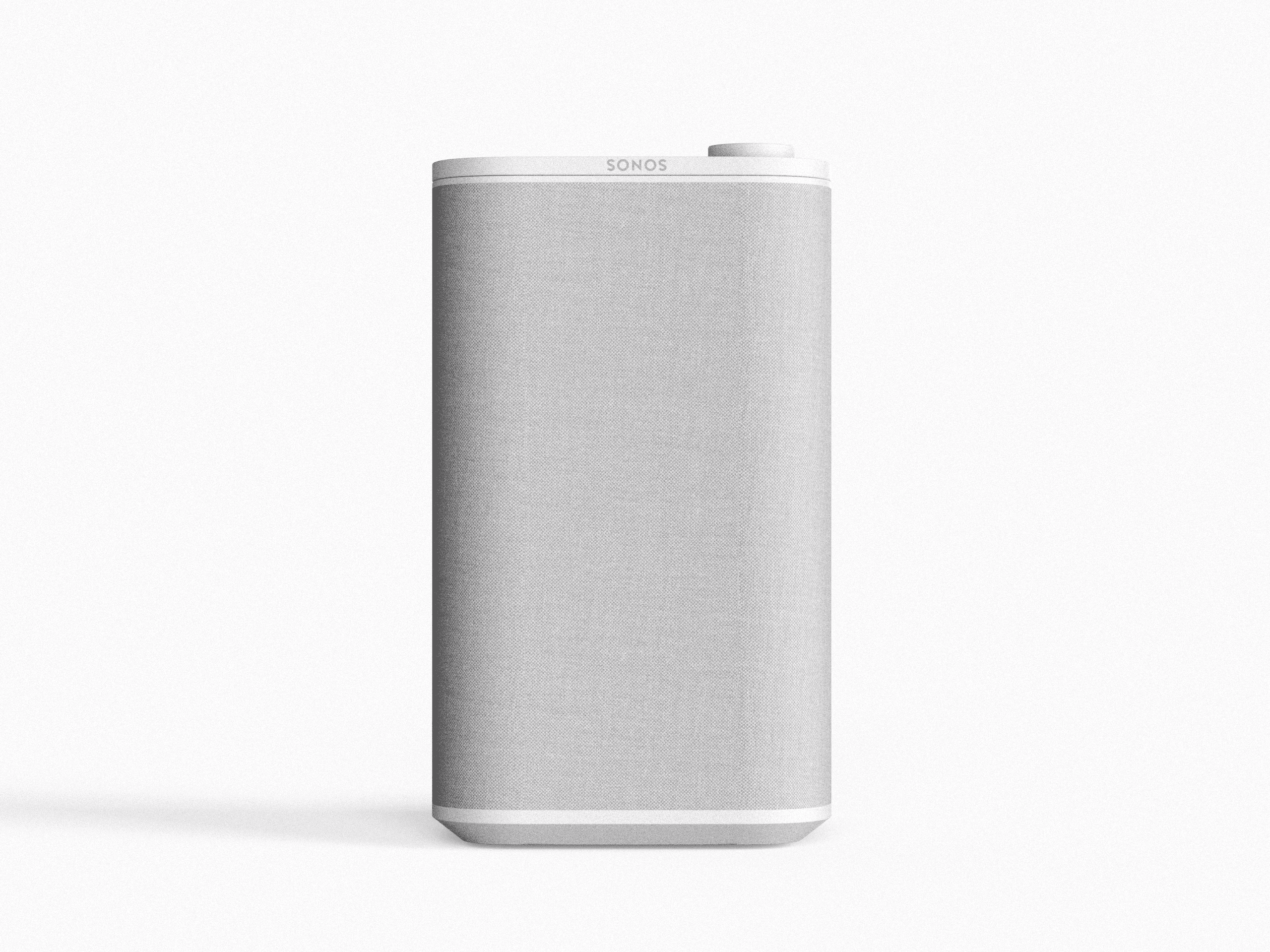


Tactile Control — Provides quick, physical access to frequently used controls.




+1-440-591-7265
jacob2se@mail.uc.edu