PROJECT GOALS

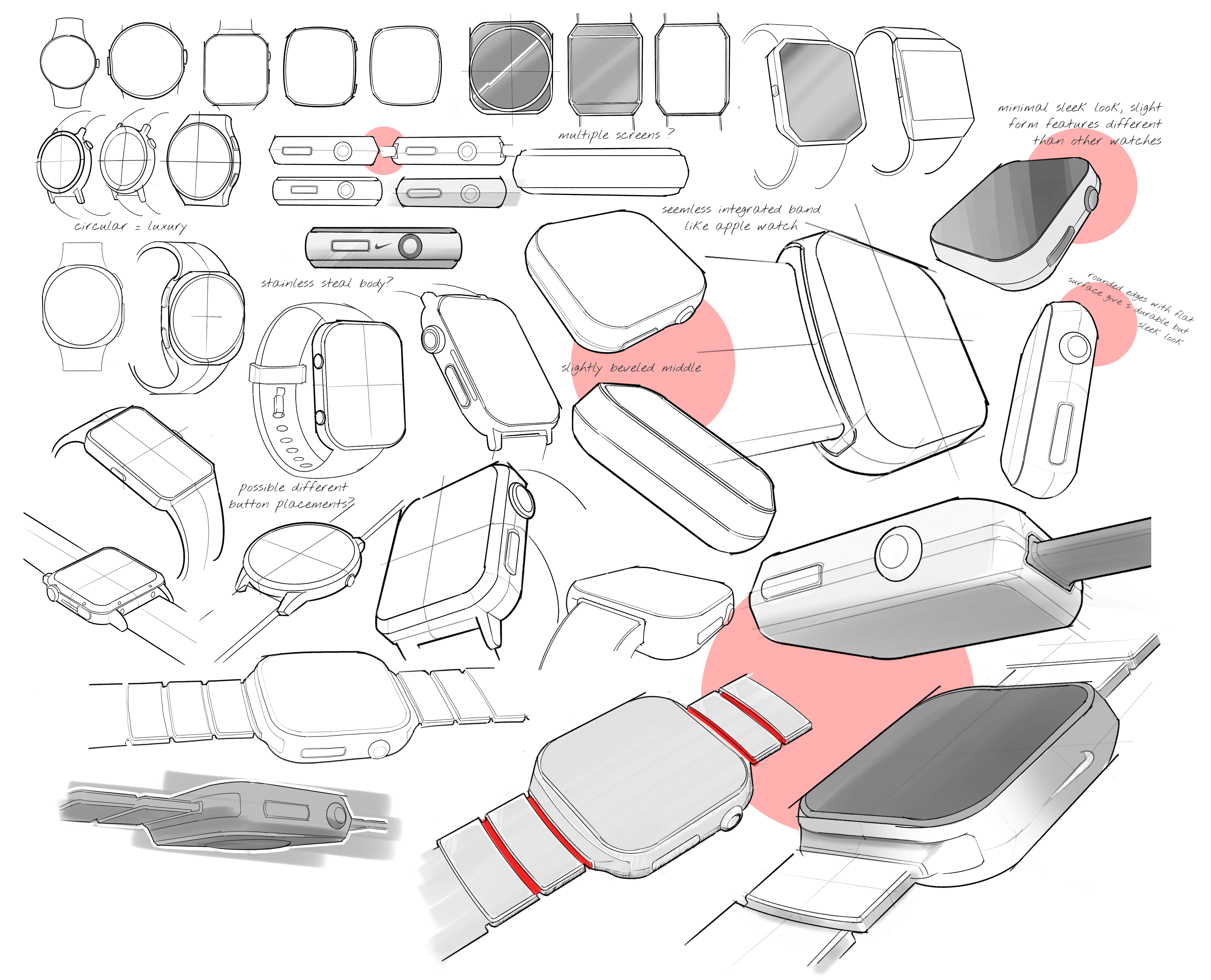
Design a Nike Smartwatch that embodies Nike’s innovation-driven identity — seamlessly integrating performance tracking, connectivity, and data-driven insight within the brand’s ecosystem of movement and progress. Develop the concept through Figma for interface design and 3D modeling for form development, ensuring it aligns with Nike’s legacy of merging technology, sport, and lifestyle.

Disciplines

Form Ideation

Research

Product Visualization

Applications

Figma

Blender

Adobe Creative Suite

Duration

12 weeks

How can athletes get valuable real-time feedback and data when it matters most?

What would training become if insight arrived exactly when it mattered most?
Real-time feedback is one of the most powerful tools for improvement—yet without a personal coach, athletes training alone rarely receive it.

NIKE

Nike has never been just about shoes — it’s about pushing the limits of human performance through innovation, connection, and data-driven insight. By uniting cutting-edge design with digital experiences, Nike has built an ecosystem where movement, technology, and progress come together — empowering every athlete to perform smarter and go further.

NIKE’s digital ecosystem already supports athletes through guided workouts, run tracking, and Apple Watch integration that monitors heart rate, pace, time, and progress. These tools deliver strong motivation and post-workout insight, but they stop short of real-time guidance.

What’s missing is contextual intelligence—the ability to understand what the athlete is doing in the moment and respond instantly. The data, trust, and user base already exist; what doesn’t is real-time, adaptive feedback that actively guides performance as it happens.

Improvement engineered through intelligence

AI opens new possibilities for how athletes connect with technology, enabling smarter, more adaptive performance improvement tools. By learning from each movement, AI can personalize training and progress — making Nike’s next evolution in innovation truly intuitive. With intelligent feedback and real-time insights, AI turns every workout into an opportunity to improve and perform better.

existing products

Smartwatches like the Apple Watch, Garmin Forerunner, and Fitbit offer features such as performance tracking, GPS, and health monitoring — each excelling in specific areas like lifestyle, endurance training, or wellness. Yet, no single device fully unites athletic performance, community connection, and digital innovation in one seamless experience — none combine all the features.

Garmin Forerunner Series

  • Highly accurate GPS tracking for running, cycling, and outdoor sports

  • Advanced performance metrics (pace, cadence, heart rate zones, VO₂ max)

  • Training load & recovery estimates to manage fatigue over time

  • Multi-sport modes designed for structured workouts and endurance training

Key limitation: insights are analyzed after activity—not adapted during performance.

Apple Watch Nike (Series)

  • Simple, motivating activity tracking via rings and streaks

  • Wide workout support (running, gym, HIIT, basketball, yoga, etc.)

  • Real-time stats display (heart rate, time, calories)

  • Seamless integration with Nike Training Club & Apple Fitness+

Key limitation: motivation is generic—no sport-specific or adaptive coaching.

Fitbit Versa / Sense Series

  • Automatic workout detection for common activities

  • Heart rate–based effort tracking (Active Zone Minutes)

  • Recovery and readiness insights tied to sleep and stress

  • Approachable fitness data for casual and wellness-focused users

Key limitation: feedback is summarized, not actionable in the moment.

Apple Watch Ultra

  • Rugged, high-performance hardware for endurance and outdoor sports

  • Precision dual-frequency GPS for long-distance training

  • Dedicated action button for starting workouts mid-motion

  • Expanded metrics for hiking, diving, trail running, and endurance efforts

Key limitation: powerful data capture, but still no real-time intelligence or guidance.

Summary: All of these smartwatches collect strong fitness data, but their key limitation is that insights are mostly generic or post-workout—none provide real-time, adaptive, sport-specific guidance during activity.

Technology that Makes it possible

This concept builds on technology already used in modern wearables like the Apple Watch Ultra, Garmin Epix Pro, and Polar Vantage V3. These devices combine a full sensor suite—9-axis motion tracking, multi-band GPS, barometric input, optical HR/HRV, skin-temperature and EDA sensing, microphones for impact cues, and on-device machine learning. Together, they interpret movement, timing, load, and environmental change with surprising precision, allowing ideas like this to stay ambitious while remaining fully grounded in proven hardware.

Design Language mood board

Key Idea

Pick Your Play: Choose from 15 pre-set activities.

  1. Track & Move: Hit "Track" and let our precision sensors analyze your every move in real-time.

  2. Get Your Score: Receive an instant performance score out of 100 with actionable tips to improve.

3. Get Your Score: Receive an instant performance score out of 100 with actionable tips to improve

4. Dive Deeper: Tap any metric for an in-depth breakdown and expert coaching on how to improve

All UX UI and graphics were created and prototyped inside of Figma. Click the Figma logo to view Figma work flow for this project.

The band CMF explores three distinct material directions—rubber, metal, and fabric—expanded into five total colorways. The metal band pushes a more premium, athletic-lux aesthetic, emphasizing precision, structure, and visual durability. The rubber and fabric bands shift toward comfort and performance, offering softer tactility, flexible movement, and breathable contact against the skin. Together, the CMF range creates a spectrum from high-energy training utility to elevated everyday wear.